(UPDATED 1/15/2026)
Best Ways to Reach Me
- Canvas Messaging (preferred)
- Email: spencer_ross@uml.edu
- Phone: x45305, WhatsApp
Basic Course Information
- Course Meeting: Tuesdays/Thursdays 11:00a-12:15p, PTB 222
- Office Location, PTB 232 (If on campus)
- Office Hours: Tuesdays/Thursdays 9:30-11:00am or make an appointment on Calendly
- Canvas Course Section
Table of Contents
- What’s this course about?
- What materials will you need?
- How will you be evaluated?
- What’s being evaluated?
- My course policies (AI Policy Revised Spring 2026; tldr: NO)
What’s this course about?
Apple. Amazon. Walmart. Nike. Starbucks. Those are the easy brands we think of on a regular basis. However creating and managing strong brands is anything but easy. In this course, we’ll examine brands as long-term strategic systems rather than just creative outputs. The course will integrate classic branding theory with contemporary issues such as platform economies, creator culture, digital ecosystems and touchpoints, and purpose-driven branding. You’ll be analyzing how brands create, protect, and even erode value in a system that aligns organizational identity, consumer meaning-making, and competitive positioning.
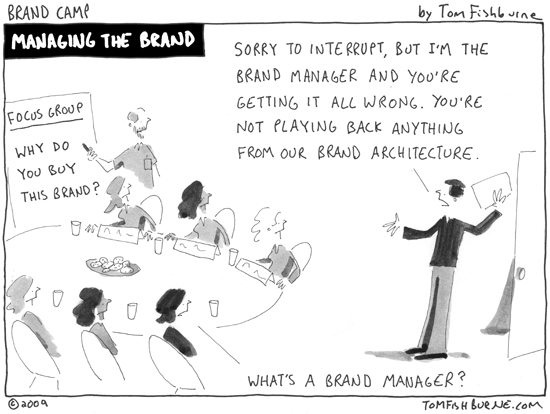
This course is designed to mirror how branding decisions are made in real organizations: with imperfect information, competing priorities, and real consequences. There are no perfect answers– only better and worse strategic judgments. Your goal is not to be “right,” but to be thoughtful, defensible, and original. By the end of this course, you’ll have sharpened your critical thinking skills as a brand manager, and be able to apply those skills to developing marketing strategy.
What should you be able to know after successfully completing this course?
| GOALS | OBJECTIVES |
|---|---|
| You’ll know/understand: | You’ll be able to: |
| Branding as a strategic system. | Conceptualize brands as dynamic strategic systems rather than static symbols. |
| Apply advanced branding frameworks to diagnose brand equity, positioning, and meaning. | |
| Design coherent brand strategies that sustain brand value across touchpoints and platforms. | |
| How brands create, protect, and lose value over time. | Diagnose brand strength, weakness, and risk using established frameworks such as a brand audit. |
| Articulate how brand architecture and brand–product strategy shape growth and risk. | |
| Evaluate branding decisions under uncertainty. | |
| Tradeoffs and constraints in brand strategy. | Diagnose external and internal brand influences and stakeholders. |
| Translate abstract brand meaning into concrete design, experience, and governance decisions. | |
| Make and justify strategic brand tradeoffs. | |
| Cultural, technological, and organizational forces shaping brands. | Anticipate future branding challenges related to technology, ethics, and society. |
| Evaluate how culture, identity, and power shape brand perception and value. | |
| Communicate brand strategy persuasively to managerial and non-managerial audiences. | |
| Brand purpose and responsibility. | Evaluate ethical and reputational risk. |
| Communicate or defend brand decisions under questioning using evidence. | |
| Demonstrate original, responsible judgment and embedded brand purpose. |
What materials will you need to be successful in this course?
Media
How Brands are Built podcast (Spotify) (Apple) (YouTube)

HBR on Strategy podcast (Spotify) (Apple). It ended in 2025.

How I Built This with Guy Raz podcast is part entrepreneurial founder stories, part core history of each brand (Spotify) (Apple) (YouTube)

Business Wars podcast (goes into big name brand rivalries) (Spotify) (Apple) (YouTube). There is also a Business Wars Daily podcast. Both have ended as of 2024.

99% Invisible (99PI) podcast is about hidden design in the world (Spotify) (Apple) (YouTube)
Books (Recommended, but not required)
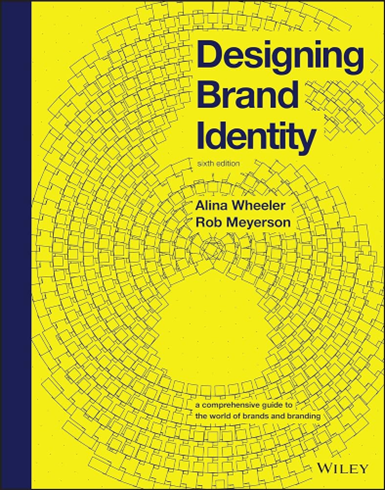 |
Designing Brand Identity (5e), Alina Wheeler and Rob Meyerson ($32 hardcover on Amazon) ISBN 9781119984818 (This is a fantastic resource we’ll be referencing often, so I highly recommend.) |
 |
Aaker on Branding (2e), David Aaker ($16 paperback on Amazon) ISBN 9781636986654 |
 |
How Brands Become Icons: The Principles of Cultural Branding, Douglas Holt ($18 hardcover on Amazon), ISBN 9781578517749 |
As this course is designed to be topically relevant, readings will be posted on Canvas (see below) the week before the planned topic. You’ll also be responsible for bringing your own readings/links/clips to class.
CANVAS

I’ll post links and readings here, as well as assignment submissions here, the gradebook will be here, etc.
How will you be evaluated?
Summary (Points)
| Assignment | % Contribution to Course Grade | Brand Autobiography | 5 | Brand Audit and Strategic Diagnosis | 15 | Brand Identity and Architecture Rationale | 10 | Media Analysis Memo | 10 | Course Engagement | 13 |
| Manning BeHub Research Credits | 2 |
| Midterm Strategic Case Presentation | 15 |
| Final Strategic Brand System and Ethics Project | 25 |
| Project Peer Evaluation (online link) | 5 |
Performance Scale (Points)
| Excellent to Good | Satisfactory | Unsatisfactory but Passing | Failing |
|---|---|---|---|
| 94 – 100 = A 90 – < 94 = A- 87 – < 90 = B+ 84 – < 87 = B | 80 – < 84 = B- 77 – < 80 = C+ 74 – < 77 = C | 70 – < 74 = C- 67 – < 70 = D+ 64 – < 67 = D 60 – < 64 = D- | 0 – < 60 = F |
What’s being evaluated?
Brand Autobiography (5%)
Brands have significant meaning in our own lives as consumers, often leading us to develop close “relationships” with those brands. You’ll be exploring a relationship with a brand in your life and how the brand strategically worked to nurture (or break) its relationship with you. The point of the brand autobiography is to help you explore how personal identity and lived consumer experiences are shaped by the cultural meaning and power of a brand.
Brand Audit and Strategic Diagnosis (15%)
You’ll be conducting an analysis of a real brand that you (and other consumers) interact with. Your deep audit of the brand will integrate consumer perception, competitive context, cultural meaning, and strategic coherence. This will require a written audit with observations. The point of the brand audit is to better understand how brands are valuable to firms through diagnosing a real brand’s health and determining if it is functioning as a long-term strategic asset.
Brand Identity And Architecture Rationale (10%)
Develop and design a partial brand identity system and justify each decision strategically (not just aesthetically). Justify your chosen brand identity and its architecture. The point of the identity and architecture is for you to justify brand design and portfolio decisions as drivers of strategic brand clarity rather than mere aesthetic choices.
Media Analysis Memo (10%)
Using some of the assigned course media, you’ll write a critical essay evaluating a brand’s stance on a social or political issue, grounded in course frameworks and class discussion. The point of the media analysis memo is for you to link practitioner insights from podcasts and videos to the formal frameworks needed for responsible brand stewardship.
Midterm Strategic Case Presentation (15%)
Teams will analyze a complex branding case and defend a strategic recommendation under live questioning. The point of the strategic case presentation is to test your ability to evaluate complex strategic branding decisions and defend strategic reasoning under the pressure of real-world constraints and risks.
Strategic Brand System and Ethics Final Project (25%)
In groups, you’ll be creating a complete, forward-looking brand system for an emerging brand of your choice, including the strategy deck, brand governance rules, and brand experience touchpoints. You’ll want to be considering the brand’s positioning, architecture, experience design, and a future roadmap for brand growth. The point of this project is to engage in integrative thinking of the design and oral defense of a complete brand system that integrates positioning, architecture, and ethical legitimacy.
Online Peer Evaluation (5%)
A link to a rigorous online peer evaluation form will be posted after the last class. I use your peers’ scores to calculate your own evaluation grade. Therefore, failure to submit the evaluation by the assigned date will be an automatic “0” (zero) for your own evaluation score. If you can’t be bothered to give your peers their scores, I won’t be bothered to calculate your score.
Course Engagement (13%)
Communication skills are extremely important in marketing (after all, it’s one of the things we do!), which is why I grade course engagement on active participation and contribution, not mere class attendance (you’ll note I don’t have a formal attendance policy). I also expect everyone to actively engage in class discussions, any class exercises, and make quality contributions/discussions on Canvas. All of this counts as engagement. Therefore, course engagement is a function of: (in-class active participation + outside-class on Canvas)*(volume)*(quality).
Both inside and outside of classtime, I encourage us to work hard to create and maintain a supportive, respectful, and empathetic environment. There will be a diversity of valid, lived experiences coming to the table– especially as we discuss topical marketplace issues that may uniquely affect each of us. While I’ll help guide you, the class should be a thought lab to express your critical and analytical thinking, while also considering the valid backgrounds of others inside and outside of the class.
While you must be present in classes to be able to participate in them, I guarantee attendance alone will not earn a full 10% engagement mark (for example, attendance but no participation may earn closer to 80% while no attendance but a lot of participation may earn closer to 70%). Your involvement and participation are vital to the success of yours and your peers’ learning experiences; consistency and quality matter. I encourage actual, real discussion in and out of classtime. The point of course engagement is to foster communication and collaboration skills with peers, as well as to actively, critically engage the content, both inside and outside class lecture.
Manning BeHub (Behavioral Hub) Research Credits (2%)
You’re required to participate in at least 2.0 credits of Manning BeHub research studies (or, if you choose, see me for an alternative credit task) as part of your course grade. 2.0 credits is approximately 2-4 studies in a semester (1.0 credit = 1% of final course grade). Most studies take between 10-20 minutes per study. If you accumulate credits for my course in excess of the 2.0, up to an additional 2.0 credits may be awarded as extra course credit
Many studies will be online studies that can be done at home, though occasionally, in-person “lab” studies will be offered for credit or other incentives. I’ll send out announcements via Canvas to the class as the BeHub periodically announces new study availability. You may also direct BeHub questions to me as one of its co-administrators. Study availability may be ongoing through the semester. However, studies are usually only open for limited periods of time before they expire and are then unavailable for participating credit. Please make sure you participate in studies before they are closed. The point of participating in research studies is that these studies will help your professors (including me) generate knowledge and insight about business, as well as give you firsthand experience by going through the process of how business research is conducted.